
Trump Puts Michigan’s Registration Case Back in the Spotlight
President Trump used a nationwide address to highlight several areas he called major concerns, including the GBI Strategies voter-registration investigation in Michigan. He said newly declassified documents confirmed key details, and he promised to get to the bottom of the matter. The case centers on police reports from Muskegon and the Michigan State Police, which described thousands of voter-registration applications delivered to the Muskegon clerk’s office shortly before the November 2020 election. As usual, the public is left trying to sort through redactions, agencies, task forces, and official silence, because nothing says “trust the system” like needing a scavenger hunt to find basic facts.
The Muskegon Clerk Flagged Thousands of Forms
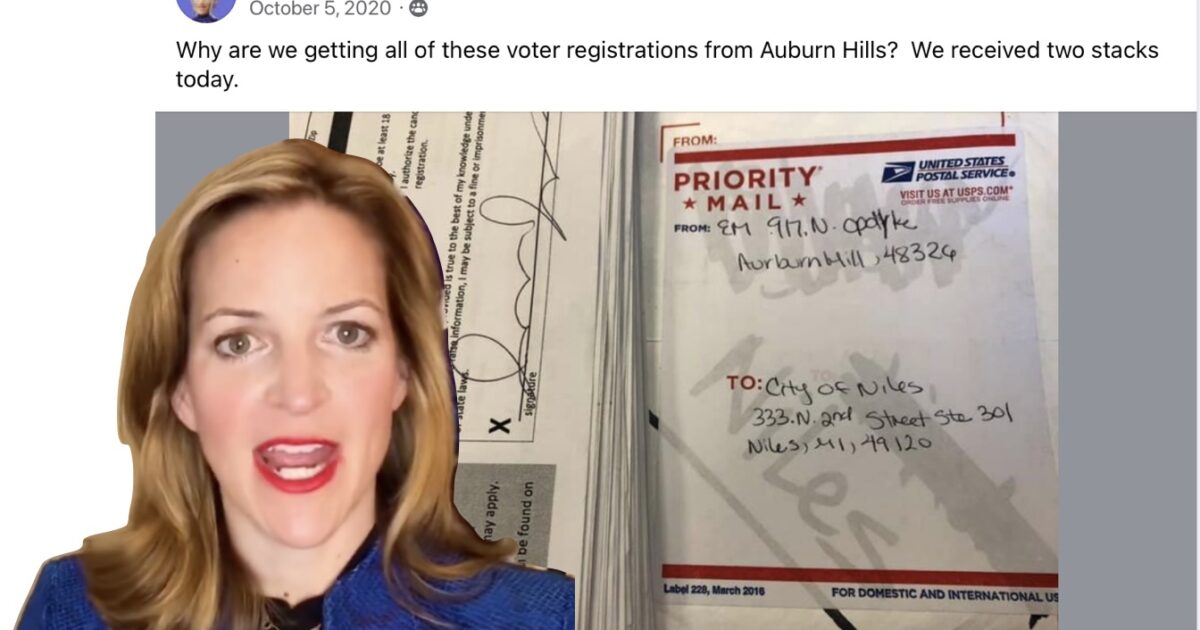
According to the reported police records, Muskegon City Clerk Ann Meisch contacted law enforcement after noticing irregularities in voter-registration applications received in person and by mail. The reports say a woman later identified in the records as Brianna Hawkins delivered between 8,000 and 10,000 completed registration forms on Oct. 8, 2020. On Oct. 20, the deadline day for in-person registration applications, she allegedly returned with about 2,500 more forms. Meisch said many forms appeared suspicious because numerous entries seemed to be written in the same handwriting, some addresses appeared invalid or nonexistent, and some phone numbers and signatures did not match records on file with the Michigan Secretary of State.
State Police and the Attorney General’s Office Joined In
The police reports say the Muskegon Police Department began looking into the matter after the clerk raised concerns. On Oct. 21, 2020, Michigan State Police First Lieutenant Mike Anderson was contacted by Tom Fabus, chief of investigations for Michigan Attorney General Dana Nessel’s office, asking for state police help in a joint investigation. A task force was then formed. One example cited in the reports involved a registration form using the address of Muskegon High School, which is useful if one is registering for chemistry class, but less useful if one is claiming a home address. The reports also described other addresses as not existing in the city’s house-numbering system.
The Paid Canvassing Question
The reported suspect told investigators she was being paid $1,150 per week to find unregistered voters and provide them forms so they could register or obtain absentee ballots. That kind of paid voter-registration work is not automatically illegal, but the concerns described in the reports were not about clipboards and good intentions. They were about alleged duplicate handwriting, bad addresses, questionable signatures, and a large batch of forms arriving right before Election Day. That is the kind of paperwork pile that should make election officials reach for a magnifying glass, not a press release.
The Clips Circulating Online
Two X posts tied to the story circulated with video and commentary about Trump’s remarks and the Michigan records. The posts point back to the claim that the Muskegon matter was based on Michigan State Police and Muskegon Police reports obtained through public-records efforts. The larger issue is simple: when elections depend on public trust, officials should be eager to explain what happened, what did not happen, and whether any bad registrations were blocked before they could affect the rolls. Instead, voters often get a fog machine with a government seal on it.
WE’D LOVE TO HEAR YOUR THOUGHTS! PLEASE COMMENT BELOW.



Leave a Comment