
Federal Prayer Meets Federal Pushback
Since early 2025, prayer inside federal agencies has turned into a fresh legal brawl, which is Washington’s favorite way to prove it has not learned anything from history. The Trump administration has backed services at places like the Pentagon and the Labor Department, and the new routine has brought lawsuits, press releases, and the usual chorus of people who think a prayer in a government building means the republic is one hymn away from collapse. Defense Secretary Pete Hegseth organized the first Secretary’s Christian Prayer and Worship Service in the Pentagon auditorium in May 2025, with employees invited to attend during the workday. The Labor Department later began monthly Christian services of its own. Critics say this crosses a line, while supporters say it is simply public faith, not a state church. In Washington, of course, every disagreement quickly becomes a constitutional morality play, because no one can resist a good drama if it comes with a federal filing fee.
The Phrase Everyone Quotes
The words separation of church and state get treated like a magic spell, but they are not in the Declaration of Independence, the Constitution, or the Federalist Papers. They come from a private 1802 letter Thomas Jefferson wrote to the Danbury Baptist Association, where he tried to reassure a religious minority that the federal government would not meddle in worship. That is a very different thing from a legal ban on religion anywhere near government property. The First Amendment stops Congress from creating an official national church, forcing people to worship, or taxing citizens to fund a denomination. It does not say the government must act as if faith is radioactive. Roger Williams used an even earlier image in 1644 when he spoke of a wall or hedge between the wilderness of the world and the garden of the church, but he meant to protect the church from government corruption, not to scrub every sign of religion out of public life. The modern slogan is used like it has special powers, which is convenient, because slogans are much easier to repeat than reading assignments.
The Court Has Not Built A Blank Wall
The Supreme Court has not treated public religion as some kind of constitutional felony. In Zorach v. Clauson in 1952, the Court upheld a New York City policy that let students leave school for religious instruction, and Justice William O. Douglas wrote that America is a religious people whose institutions assume a higher power. He also said the government does not have to show callous indifference to religion. That matters, because it shows the Constitution has room for cooperation without command. The line is still there, of course. The state may not establish a church or coerce belief. But the Court has long recognized that the government can accommodate faith without becoming a Sunday school with a budget office. That old legal reality keeps getting buried under today’s headline machine, which likes a clean conflict more than a careful distinction. And careful distinctions are hard to monetize, which probably explains why they keep getting ignored.
The Founding Era Was Not Secular Theater
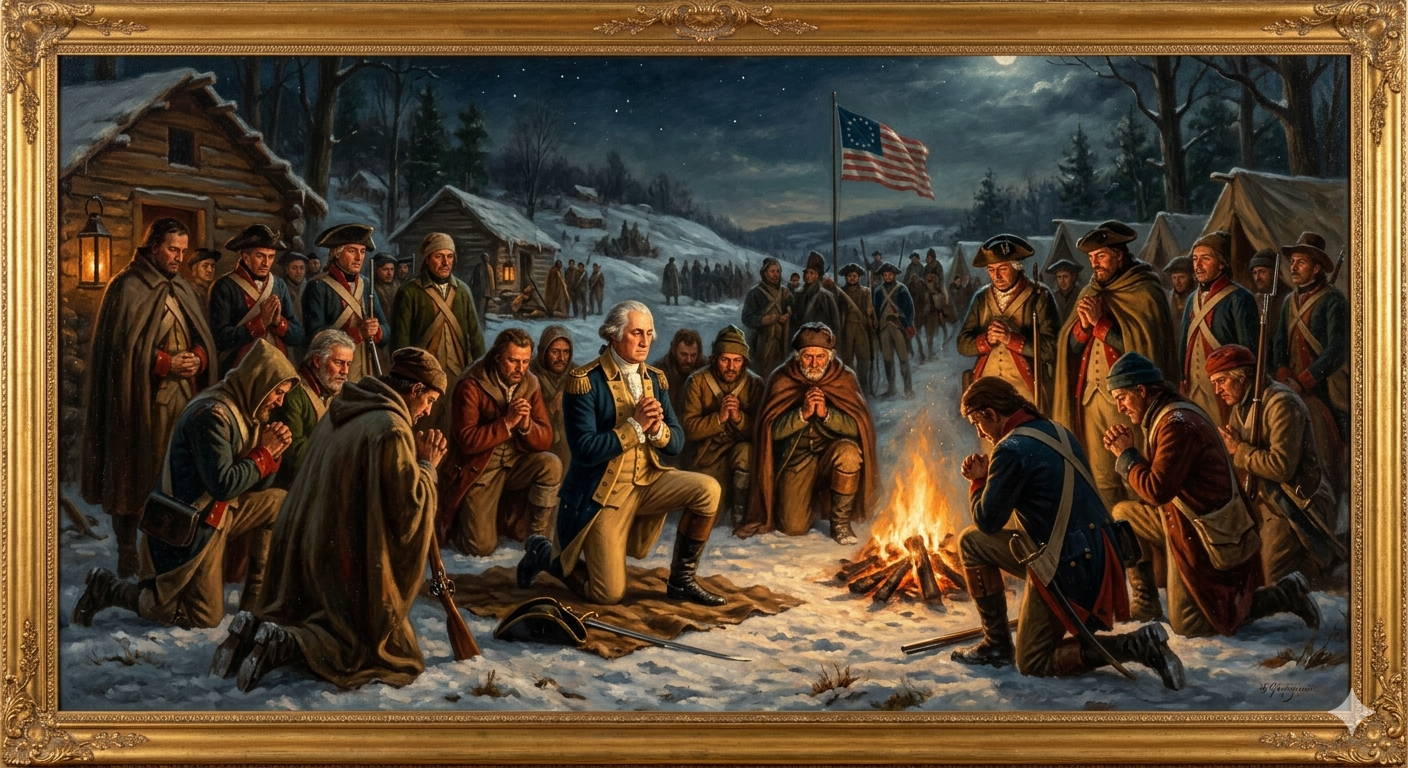
The country did not begin with a blank page and a stapled copy of modern activist talking points. The Continental Congress created the military Chaplain Corps in 1775 at George Washington’s request, and it also called the colonies to prayer that same year, before the Constitution was even on the table. When the Senate first met in New York in 1789, one of its first acts was to choose a chaplain. The House did the same soon after. The Supreme Court still opens with the call, God save the United States and this honorable Court. Washington himself made his position plain in his 1783 Circular Letter to the state governors, where he asked God to protect the states, guide the people, and help the nation act with justice, mercy, charity, humility, and a peaceful spirit. Later presidents kept that pattern alive. There have been 151 national calls to prayer, humiliation, fasting, and thanksgiving from 1789 through 2022, and 35 of the 46 presidents signed such proclamations. Every president since Eisenhower has taken part in the National Prayer Breakfast. Reagan even declared 1983 the Year of the Bible, which surely gave the professional secularists a headache that has still not fully passed.
Modern Presidents Kept The Tradition Alive
Religion in public life did not stop with the founders, and it did not wait politely outside the White House gate. Jimmy Carter held a half-hour interfaith prayer service at the Lincoln Memorial on the morning of his 1977 inauguration. Newsweek once described the George W. Bush White House as the most resolutely faith-based presidency in modern times, with prayer meetings running day and night and Bible study encouraged. Critics often speak as if all of this sprang from nowhere, but the record says otherwise. Madison issued proclamations for fasting and thanksgiving. Jefferson signed treaties that sent religious ministers to Native Americans. In other words, the men most often used to defend strict separation were not living in a sterile lab experiment. They were governing a country where religion and public duty overlapped, as they still do. That is the part modern spin doctors hate most. History is annoyingly hard to edit, and it has a habit of showing up with footnotes.
The New Lawsuits Look Familiar
The legal response has come mostly from Americans United for Separation of Church and State, which filed suits in March 2026 tied to records requests and federal paperwork, not a direct attack on the services themselves. The group has also gone after other parts of the administration, including agencies and the president’s February 2025 order aimed at rooting out anti-Christian bias in the federal government. Separately, Trump created a Religious Liberty Commission in May 2025, with members that included Pastor Paula White-Cain, Cardinal Timothy Dolan, Rabbi Meir Soloveichik, and Franklin Graham. Americans United and Democracy Forward later sued over the commission’s makeup and tried to block its report on behalf of several interfaith and minority religious groups. At one hearing, Texas Lt. Gov. Dan Patrick, who chaired the commission, called church-state separation the biggest lie told in America since the founding. That is the kind of line that makes for lively cable TV and even livelier briefs, but the deeper issue is simple enough: can the government acknowledge faith in public without turning it into a badge, a mandate, or a lawsuit generator? The answer has been in the history books for a long time, even if the bureaucracy would prefer to keep reopening the file.
WE’D LOVE TO HEAR YOUR THOUGHTS! PLEASE COMMENT BELOW.
Leave a Comment