
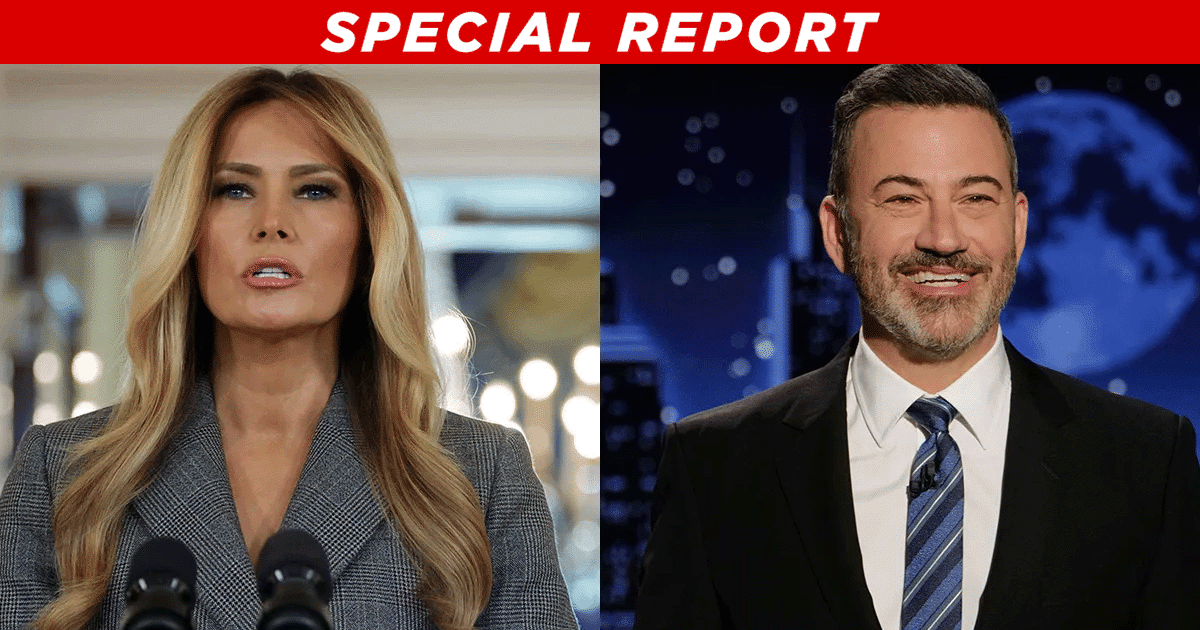
Late-Night Lost Its Sense of Humor
There was a time when late-night TV aimed for jokes, not sermons. That old model had flaws, but at least it understood the basic idea of comedy: make people laugh and send them to bed in a better mood. Now the format often feels like a staff meeting for activists with better lighting. Jimmy Kimmel’s latest round of comments showed that shift again. He leaned into a crude line about Melania Trump, then acted shocked that viewers noticed. In modern media, this is called “taking a stand.” In older times, it was called being rude at the wrong moment.
The Comment and the Backlash
According to reporting cited by The Post Millennial, Kimmel mocked Melania Trump with a line about “the glow of an expectant widow” just two days before an assassination attempt on President Donald Trump at the White House Correspondents Dinner. That is not a setup that invites applause from normal people, no matter how many studio audiences are cued to clap on command. Kimmel said he would not apologize and argued that the real issue was Trump’s “hateful and violent rhetoric.” He also dismissed the criticism as a “Twitter vomit storm,” which is a neat way to describe the internet when it stops nodding along. The public was not confused. They heard a tasteless joke, then saw a host double down instead of showing basic judgment.
ABC’s Favorite Business Model
The network side of this story is almost as familiar as the joke itself. Corporate media loves to present these moments as lonely slips, the kind that just happen in a high-pressure workplace. Of course, the same companies also spend years building a culture where employees know which targets are safe and which ones are not. The result is predictable. A host pushes too far, the backlash starts, a few executives act concerned, and then the whole machine quietly resets. That is not accountability. That is PR with a panic button. Kimmel has been through this loop before, and ABC has shown it knows how to perform outrage without actually changing much.
Why the Spin Fails
The bigger problem is not one comedian with a microphone. It is a media class that treats political cruelty as cleverness when it points in the right direction. The same people who demand softer language from everyone else often excuse ugly behavior from their own side with a shrug and a smile. That is why viewers are tired of the routine. They can see the double standard, even if the network panel cannot. When a host jokes about death, then hides behind “context” and “satire,” the issue is not humor. It is a culture that mistakes contempt for wit and then expects applause for the effort.
What Viewers Are Seeing
People do not need a communications team to tell them when something feels wrong. They know the difference between a sharp joke and a cheap shot. They also know when a network is trying to dress up bad judgment as courage. Kimmel’s remarks may satisfy a narrow audience that enjoys political sneering, but they do little for anyone who still expects common decency from a public platform. The lesson here is simple enough. If late-night TV wants to keep pretending it is entertainment, it might help to act less like a political briefing with punch lines. Otherwise, the only thing left to laugh at is the corporate script.
Leave a Comment