
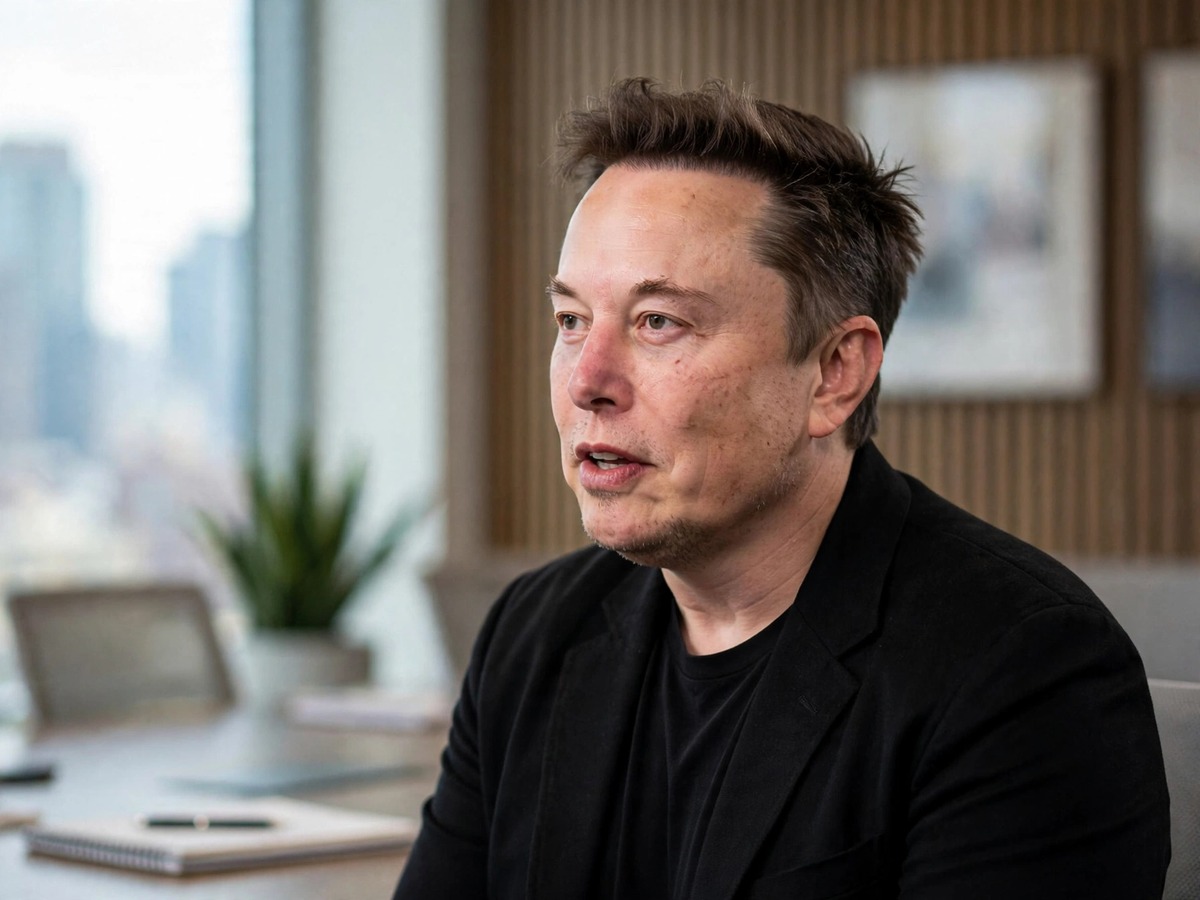
Elon Musk says Starlink Mobile is close to delivering nationwide phone coverage in the United States, and he believes the service has just gained the missing technical ingredient. SpaceX acquired 800 MHz spectrum, which Musk says should help satellite signals reach indoors and get through walls and other obstacles. That could put Starlink Mobile in position to challenge established wireless companies, assuming regulators approve the next step.
Musk highlighted an X post from Tesla investor and commentator Sawyer Merritt. Merritt contrasted an AT&T CEO’s skepticism with SpaceX’s spectrum purchase, writing: “AT&T CEO: Starlink Mobile won’t be able to penetrate walls. SpaceX: We’ve acquired 800 MHz spectrum, which will allow Starlink Mobile to provide better indoor coverage, including signals that can penetrate walls and other obstacles. People are underestimating Starlink Mobile.” Musk responded: “This is the last critical piece of the spectrum puzzle needed for SpaceX to provide complete phone coverage in America.”
That is a substantial claim, but the technical issue matters. A signal that works in open air is not automatically a signal that works inside a home, office, or store. The newly acquired spectrum is being presented as the bridge between satellite service and ordinary daily use. For customers tired of watching a signal bar disappear the moment a building gets involved, that is a more interesting promise than another glossy corporate presentation.
A Friday CBS News report said SpaceX agreed to buy radio-airwave licenses intended to help Starlink Mobile provide cell service inside buildings. The deal would let the company combine satellite-to-mobile transmissions with “an advanced terrestrial deployment that can seamlessly connect devices everywhere,” according to a company statement. The agreement still needs FCC approval, so the service is not simply ready to flip on nationwide tomorrow. Regulators, as usual, retain the ability to turn a bold engineering plan into a long appointment on the calendar.
SpaceX also said the FCC approved Starlink Mobile’s application to launch 15,000 satellites that would transmit radio waves in the 2 gigahertz band and connect directly to cell phones. UBS analyst John Hodulik offered a measured assessment: “These airwaves are compatible with existing handsets, and we do not foresee obstacles to regulatory approval. That said, we still believe it will take time for SpaceX to scale its wireless ambitions, and the impact to near-term wireless industry fundamentals is limited.”
Meanwhile, Musk faced a very different kind of signal problem. A documentary titled “Musk” was scheduled to open in Los Angeles and New York theaters Friday. NBC News reported that the film, described as critical of Musk, included negative comments from some of his employees about him and his companies. Musk called the four-hour production a “hit piece” and “boring,” then criticized director Alex Gibney.
He said Gibney had “just assembled a hit list of people who either have an axe to grind or don’t even know me (but still have an axe to grind).” Musk also said the director has “ZERO integrity” and is a “horrible human.” That is not exactly a restrained film review, but restraint has never been the main attraction of Musk’s public commentary.
Politics added another layer to the week’s headlines. America PAC, the main Musk-affiliated super PAC, had deployed $24.8 million of the $31 million it spent this year into seven key Senate contests as of October 6, according to Wired. The races were described as close or toss-ups and as a possible path for Democrats to take control of the chamber. Republicans were fighting to preserve their slim House majority and 53-47 Senate edge, while President Trump urged citizens to vote. In other words, Musk was not merely discussing technology, he was spending heavily in the political arena as well.
Starlink Mobile therefore arrives with a giant promise and several practical hurdles. The 800 MHz spectrum may help with indoor coverage, but FCC approval and the time required to scale still matter. Musk sees the spectrum purchase as the final critical piece, while analysts are warning that building the actual wireless operation will not happen overnight. The next test will be whether the satellites, spectrum, and terrestrial network can deliver the seamless service being advertised. Until then, the signal is promising, but the rollout remains a work in progress.
Source: https://www.thegatewaypundit.com/2026/10/elon-musks-starlink-set-become-major-mobile-carrier/
Leave a Comment