
Fort Worth Speech Dispute Draws First Amendment Questions
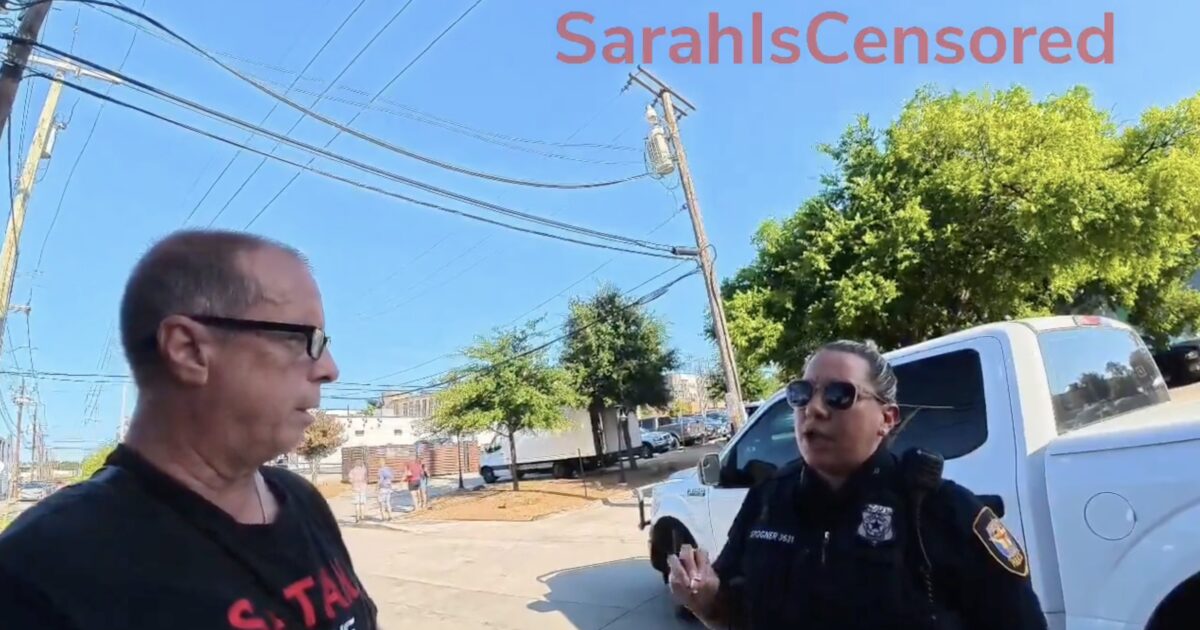
A June 27 encounter at Trinity Pride Fest in downtown Fort Worth, Texas, has stirred a fresh fight over public speech, police power, and the ever-popular modern theory that feelings can rewrite the Constitution if everyone just squints hard enough. According to video and reporting from Sarah Fields, Christian street preachers David Grisham, a retired police officer, and Richard Penkoski were preaching on public property near the event when Fort Worth police officers approached them. Police had set up barricades around streets and sidewalks for the festival, and officers moved the men farther from the area. The key issue is simple: public streets and sidewalks are traditionally treated as public forums, even when a permitted event is nearby. That does not mean anyone can block traffic or blast a megaphone into someone’s ear, but it also does not mean a private event gets a roaming speech veto over the surrounding city grid.
Officer Says Offended Listeners Could Mean A Ticket
The most notable moment came when a female officer told the preachers, “If someone is offended by your talking, then we have a problem,” according to the video. She also said, “If they are offended by your speech, OK, I will write you a ticket.” When the preachers pushed back and argued that offensive speech is protected by the First Amendment, the officer said the citation would fall under disorderly conduct. That is where the bureaucratic fog machine really began humming. The First Amendment does not protect every action in every place at every volume, but “someone is offended” is not supposed to be the magic phrase that turns lawful speech into a police matter. If it were, every city council meeting in America would require a holding cell and a coffee truck.
Prior Fort Worth Fight Comes Back Into View
Fields reported that Grisham told officers he had sued Fort Worth in 2014 over a similar issue and that the case ended with a settlement and an official apology from the city. According to her account, one officer dismissed that history and said, “I don’t care, you can file whatever lawsuit you want.” That may be candid, but it is not exactly the stuff of municipal risk management seminars. Penkoski also reportedly showed an officer Supreme Court precedent involving access to traditional public forums like streets and sidewalks when a private group has a permit. The officer allegedly acknowledged it with “Huh,” then continued enforcing the restriction. For taxpayers, this is the part where the warning light should blink, because constitutional gray areas have a funny way of becoming legal bills with the city seal on top.
Noise Citation Adds Another Layer
As the exchange continued, officers pushed the preachers farther away from the event, and Grisham was eventually cited for “unreasonable noise,” according to Fields. When asked what made the noise unreasonable, officers reportedly did not give a clear standard, though one example mentioned was putting a megaphone in someone’s ear. Penkoski said that did not happen and that the megaphone was held at waist level. Noise rules can be legal if they are clear, neutral, and applied evenly. But when a noise complaint starts blending into a complaint about offense, the line gets muddy fast. A city can regulate volume. It cannot outsource constitutional rights to the most annoyed person within earshot, tempting as that may be for anyone who has ever sat through a public comment period.
The Video At The Center Of The Dispute
The clips shared online show why the incident is drawing attention beyond Fort Worth. The dispute is not just about a Pride event, a preacher, or one officer’s wording. It is about whether police at public events are using clear law or improvising rules based on crowd reaction. That matters for Christians, conservatives, progressives, protesters, and anyone else who may one day hold an unpopular sign in the wrong zip code. Rights are not very sturdy if they only work after applause.
WE’D LOVE TO HEAR YOUR THOUGHTS! PLEASE COMMENT BELOW.

Leave a Comment