
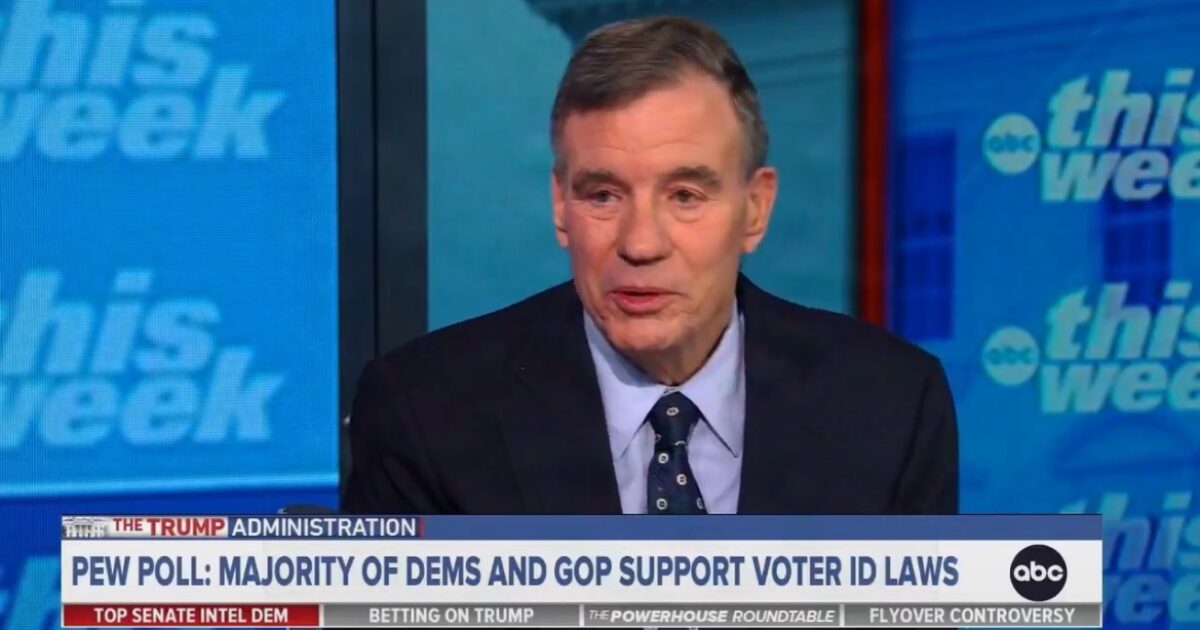
Warner Meets the Fine Print
Sen. Mark Warner found himself in an awkward spot on ABC’s “This Week” during a discussion about voter ID and the SAVE America Act. Host Jon Karl asked Warner why Democrats oppose a measure tied to tighter voting rules, including photo ID requirements for voter registration. Warner replied, “In Virginia, we have voter ID and photo ID!” That sounded tidy enough for television, which is often where tidy claims go to avoid exercise. Then Karl, who said he is a Virginia voter, pushed back and said that is not actually how Virginia works.
Virginia’s Rules Are Not Just Photo ID
The key issue is the word “photo.” Virginia does require voters to show identification, but it does not require only photo identification. State rules allow other forms of ID, including documents such as utility bills and bank statements. Voters who do not present acceptable ID can also sign an ID confirmation statement affirming who they are. That does not match Warner’s plain claim that Virginia has “photo ID” as the rule. It is a classic Washington moment: say the strong version out loud, then hope nobody reads the footnotes.
Karl Corrects the Record on Air
Karl did not let the claim drift by. He told Warner, “That’s actually not the case. I’m a Virginia voter. You don’t need to show a photo ID in Virginia.” He also noted that a voter can sign an affidavit-style statement if needed. That matters because the debate is not about whether identification exists in some form. It is about whether states require photo identification, and whether federal law should set stronger rules for voter registration. The distinction is small enough for politicians to blur, but large enough to matter in election policy.
The SAVE America Act Debate Gets Louder
The exchange came after President Trump urged Americans to call Congress and demand passage of the SAVE America Act. In his primetime remarks, Trump said federal officials had found about 278,000 non-citizens on voter rolls, claimed China accessed 220 million U.S. voter files, and accused China of targeting him during the 2020 election through paid media efforts. Those are serious claims, and they are now part of the political push for stricter election safeguards. Democrats, meanwhile, continue to argue against the legislation. The bureaucracy loves complexity, but voters usually prefer rules they can understand before the next ballot shows up.
WE’D LOVE TO HEAR YOUR THOUGHTS! PLEASE COMMENT BELOW.
Leave a Comment