
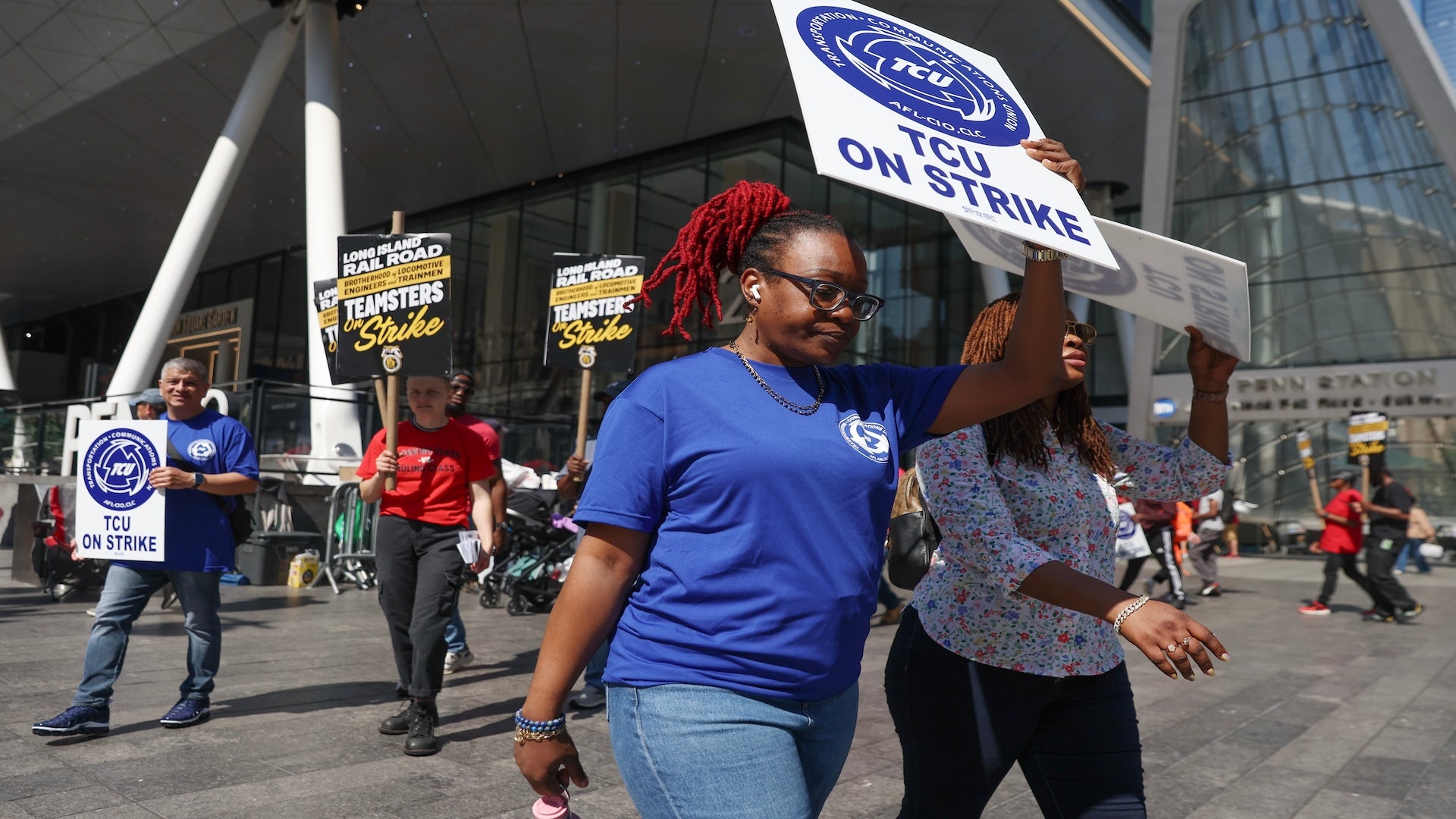
The strike came with a pricey travel bill
Five unions tied to the Long Island Rail Road strike reported more than $3.2 million in 2025 spending on hotels, resorts, restaurants, and event venues, according to LM-2 filings reviewed by Fox News Digital. The groups were the Brotherhood of Locomotive Engineers and Trainmen, Brotherhood of Railroad Signalmen, International Association of Machinists and Aerospace Workers, International Brotherhood of Electrical Workers, and Transportation Communications Union. That is a lot of money for organizations that were telling the public workers were feeling squeezed by rising costs. Apparently the squeeze stops just short of the minibar.
What the filings show
LM-2 forms are annual labor disclosures filed with the Labor Department and list receipts, spending, officer pay, and other expenses. The filings reviewed here show payments to premium hotels, casinos, waterfront resorts, and higher-end restaurants. Union spending on travel and meetings is not unusual, since groups often host trainings, conferences, and other business events. But the scale is still hard to ignore when the same unions were pushing the case that pay had not kept pace with inflation.
Where the money went
The details read like a corporate offsite with better union branding. BLET and IAM together spent about $500,000 at Caesars Palace in Las Vegas, while TCU reported $856,403 at Caesars Hotel in Reno. The filings also show smaller but still notable tabs, including $6,806 at the Strip House for IAM and more than $20,000 at Peter Luger Steak House for TCU. Other venue costs included $107,375 at the Hilton Daytona Beach Oceanfront Resort, about $130,000 at TradeWinds Island Resort in Florida, and another $130,000 at the Grand Hotel on Mackinac Island. If your message is frugal working people need relief, luxury resorts are an interesting place to shop for moral authority.
The public paid the price too
The strike began May 16 and shut down the largest commuter rail line in the country, disrupting hundreds of thousands of daily riders and costing the region an estimated $61 million per day. The unions later reached an agreement with the Metropolitan Transportation Authority, which owns the LIRR, but the terms have not been made public. That leaves commuters with the familiar modern setup: a shutdown, a bill, and a press release carefully designed to sound like transparency without actually being transparent. Other large labor groups, including the NEA, AFT, International Longshoremen’s Association, and SEIU, have also reported similar hotel and venue spending in federal filings.
WE’D LOVE TO HEAR YOUR THOUGHTS! PLEASE COMMENT BELOW.
Leave a Comment