
A Deportation Flight Takes a Detour
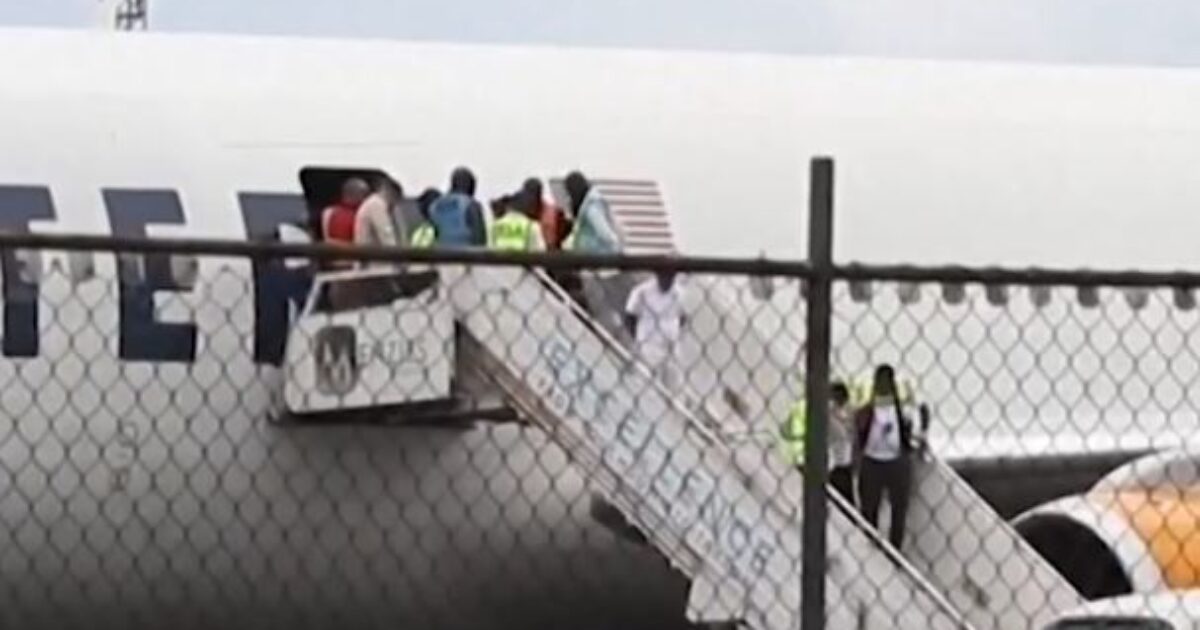
Six migrants deported from the United States refused to leave a plane after it landed in Liberia last week, saying Liberia was “not their country,” according to accounts reported by NBC News and The Associated Press. The group included four Cuban men, one Brazilian man, and one Cameroonian woman. They had arrived in Liberia on Thursday as part of a third-country deportation arrangement, but when the aircraft touched down, they stayed put. Other passengers got off because they feared officers would force them, according to a Honduran deportee who was on the flight. In the grand machinery of immigration enforcement, this was apparently the moment when the gears made that expensive grinding sound.
From Liberia to Malabo
After the six refused to disembark, they were separated from the rest of the group. Authorities told them they would be returned to the United States, according to the reporting. Instead, the plane continued to Malabo, the capital of Equatorial Guinea, where they arrived later the same day. Equatorial Guinea has its own third-country agreement with the United States. Deportees sent there under similar arrangements have been held at a hotel owned by the family of President Teodoro Obiang Nguema Mbasogo. That is quite a journey for people who started the day objecting to Liberia as the wrong destination.
The Policy Behind the Flight
The U.S. government has defended third-country deportations as a lawful tool when a deportee’s home country will not cooperate. Liberia had agreed to accept up to 1,200 deportees under a deal with the Trump administration, and this flight was among the early arrivals. The argument from the U.S. side is direct: the country has no obligation to keep people who have no legal right to remain, especially when their home governments refuse to take them back. Critics and advocates, meanwhile, have raised concerns about where people are sent and what conditions they face after arrival. As usual, Washington produces a system with paperwork, acronyms, and just enough confusion to keep lawyers fully employed.
What Is Known Now
The six who refused to leave the plane in Liberia are now among roughly 40 people held in Equatorial Guinea under similar arrangements, according to advocates and prior Reuters reporting. One of the Cuban men was identified by his wife as Carlos Rodríguez López, 35, who had been living in the Miami area. A lawyer working with some deportees described the arrival in Malabo as chaotic, with some people in chains and in distress, the AP reported. Equatorial Guinea’s government has not publicly commented on the latest arrivals. As of the latest reports, the six remain in Equatorial Guinea.
WE’D LOVE TO HEAR YOUR THOUGHTS! PLEASE COMMENT BELOW.


Leave a Comment