
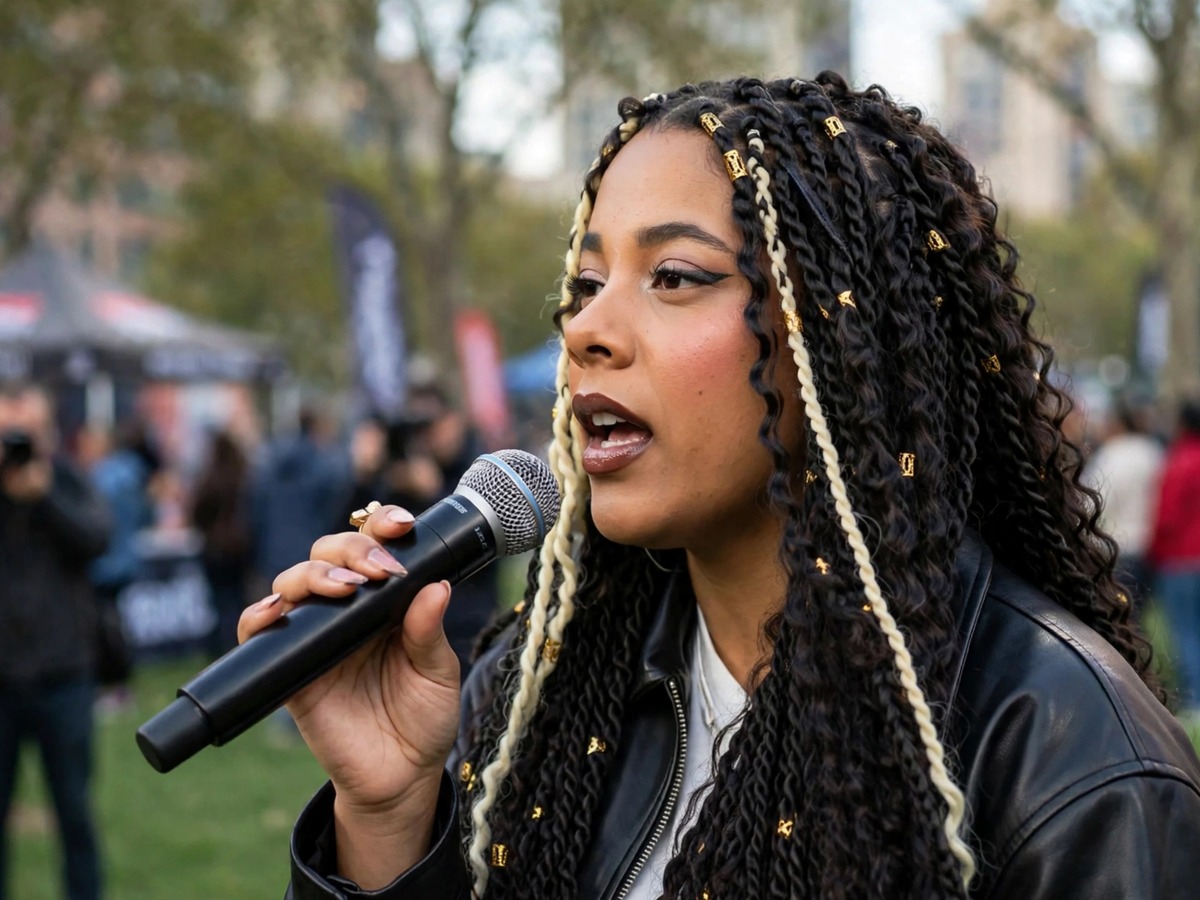
French-Canadian singer and songwriter Nina Tonji has sparked backlash in France after changing a line in the nation’s national anthem before an NFL game in Paris. Tonji performed “La Marseillaise” Sunday at the Stade de France before the matchup between the Pittsburgh Steelers and New York Saints.
The change involved one word, but it completely altered the meaning of the line. Instead of singing the traditional “Qu’un sang impur abreuve nos sillons!” Tonji sang, “Qu’un sang uni abreuve nos sillons!”
According to Fox News, the original line means, “May impure blood water our furrows/fields.” In the revolutionary context of “La Marseillaise,” the phrase referred to enemies and traitors, including French immigrants fighting alongside foreign armies, according to the report. Tonji’s revised wording means, “May united blood water our furrows/fields.”
That is not exactly a minor lyrical adjustment, like changing a word because it does not fit the melody. The modification transformed a line about defeating enemies into what Fox News described as an appeal for national unity and solidarity that includes immigrants. Apparently, France’s national anthem needed a political rewrite before kickoff. Nothing says respect for a country’s traditions quite like editing its anthem on the way to the microphone.
The response on social media was especially intense. Yves Bourdillon, a prominent journalist with the French financial and economic newspaper Les Echos, questioned how Tonji might react if someone altered Canada’s national anthem. “it would be interesting to see the look on her face if we rewrote the Canadian anthem,” he wrote in French, according to a translation from X.
Bourdillon then posted a rewritten version of “O Canada” that removed or changed references to religion and ancestors, followed by the authentic version of the anthem. His point was obvious: if traditional language is fair game for one performer to revise, the same standard could be applied to other national symbols. That tends to make people appreciate the original wording rather quickly.
Mathieu Bock-Côté, described as an intellectual, sociologist, and media personality known in both Canada and France, also criticized Tonji. In an X post translated into English, he wrote, “First, they could choose someone who knows how to sing,” before adding, “Second, that person could respect the spirit of the Marseillaise, the traditional way of singing it.”
He continued, “Third, she could avoid modifying the lyrics of the national anthem as if it belonged to her, as if she had the right to do so.” That criticism gets to the heart of the dispute. A performer can have personal political views, but a national anthem is not a personal campaign slogan or a blank page for an ideological makeover.
Fox News suggested the NFL could prevent similar controversies by requiring artists to sign binding contracts promising to perform assigned songs as written. It is a remarkably basic idea, but apparently basic rules are now considered revolutionary.



Leave a Comment