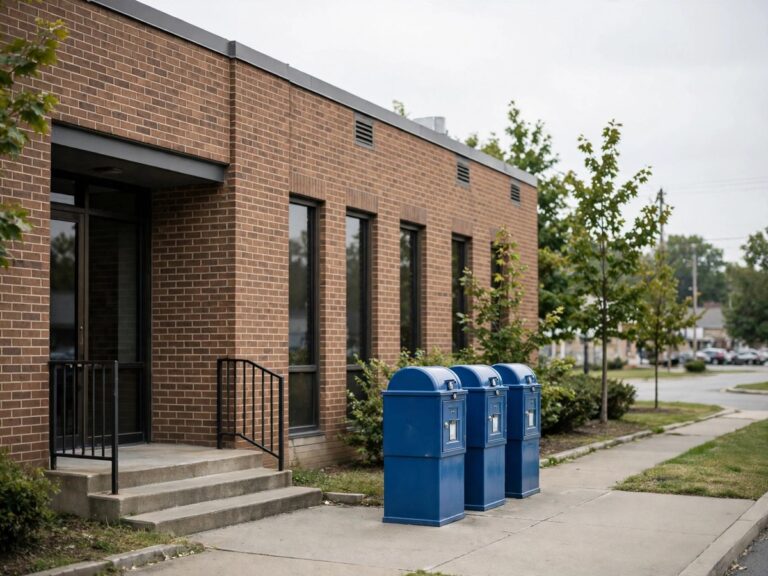
Americans should not need a criminal investigation to find out why their checks never arrived. But for thousands of victims of an Indianapolis mail-theft scheme, the person entrusted with delivering the mail was helping steal it instead.
According to Townhall, former United States Postal Service carrier Destinee Ruffin, 29, received six-and-a-half years in federal prison, followed by two years of supervised release. She pleaded guilty to conspiracy to commit bank fraud and theft of mail.
Ruffin worked at Indianapolis’s Bacon Station Post Office. Between April 2020 and May 2022, she stole checks from incoming and outgoing mail and sold them to co-conspirators. So much for the basic expectation that handing something to the Postal Service means it will reach its intended destination.
The investigation began after a customer reported a missing federal Economic Impact Payment check in spring 2020. More complaints followed. Investigators matched the affected addresses to delivery routes and found the missing checks shared a carrier: Ruffin.
Agents later mailed controlled Treasury checks with recorded serial numbers and traced them back to her route. When officers searched Ruffin’s vehicle, residence, person, and electronic devices in April 2024, they discovered thousands of stolen checks valued at more than $20 million that she had not yet sold. Stolen mail was scattered through her vehicle and home, including closets, shelves, corners, and even the bathroom.
Ruffin supplied John Young with more than $12 million in stolen checks and provided Tony McMullen with checks worth more than $235,000. McMullen altered payee information and recruited people through social media to let him use their bank accounts. Young sold checks through Telegram and worked with intermediaries who deposited checks and recruited account holders.
Behind those enormous amounts were actual households, not just numbers on a prosecutor’s spreadsheet. One victim mailed a $1,618 payment needed to maintain her retired husband’s health insurance. The payment never arrived. She discovered the theft when she showed up for scheduled surgery and learned her insurance had been terminated, forcing the procedure to be canceled.
The United States Attorney’s Office estimates approximately 6,500 victims were affected.
“Destinee Ruffin’s crimes were not isolated acts of theft; they represented a sweeping scheme that touched thousands of households and eroded a fundamental public trust,” said Tom Wheeler, United States Attorney for the Southern District of Indiana.
Three co-conspirators have already been sentenced. Young is scheduled for sentencing on December 3, 2026. U.S. District Court Judge Sarah Evans Barker imposed the sentences, and postal and Treasury investigators handled the investigation.
The case was brought as part of the Trump administration’s Task Force to Eliminate Fraud. The broader effort, chaired by Vice President J.D. Vance, targets fraud, waste, and abuse within federal benefit programs.
Protecting taxpayers and punishing people who exploit public institutions should be basic government work, not an ambitious stretch goal. Here, a prison sentence follows a betrayal that left thousands of people paying the price for trusting the mail.