
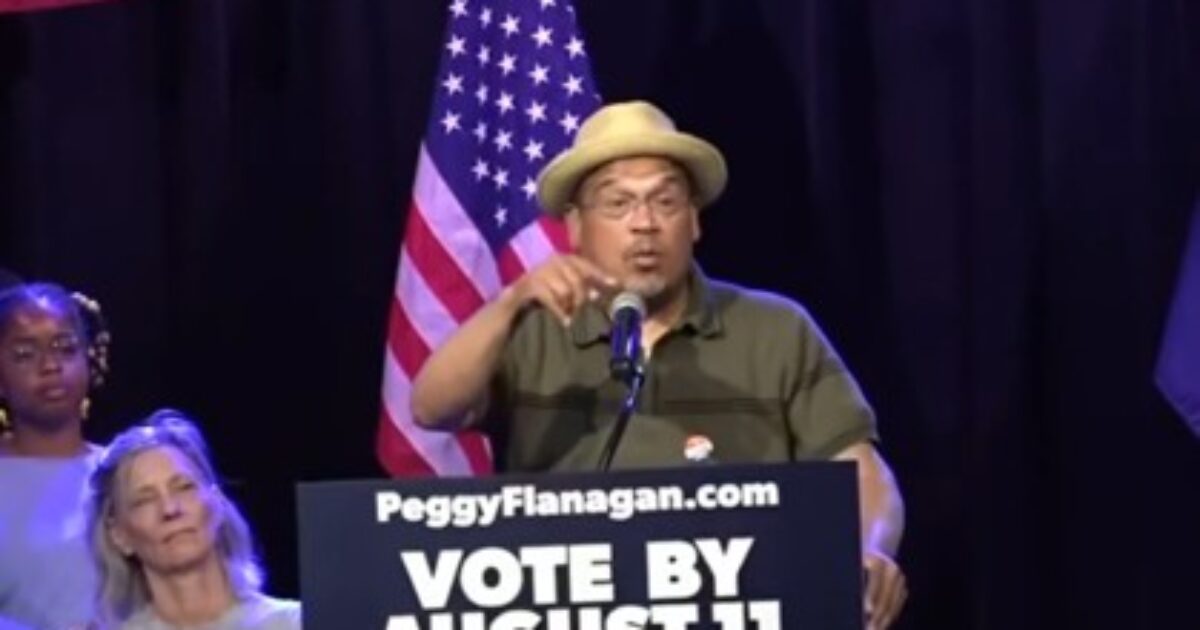
Ellison’s Rally Line Draws Attention
Minnesota Attorney General Keith Ellison spoke Monday at a Minneapolis rally for Lt. Gov. Peggy Flanagan, who is running for U.S. Senate, and one line from his remarks quickly caught fire online. Ellison told the crowd there were “a whole lot of people” who were 18 in the last election, “a whole lot of people who were not naturalized citizens in the last election,” and many others who sat out. Then he added, “We gonna get ’em all this election.” In normal campaign-speak, that could mean registering new voters, reaching young voters, and turning out people who became citizens since the last race. In political reality, where every vague phrase now gets inspected like a suitcase at customs, conservatives heard something much different.
Why the Phrase Hit a Nerve
The concern is simple: noncitizens cannot vote in federal elections, and Americans have heard years of polished lectures that election worries are all fantasy, tin foil, and too much cable news. So when a state attorney general mentions people who “were not naturalized citizens” and says Democrats will “get ’em all,” critics are not likely to respond with warm trust and a muffin basket. The clip does not show Ellison directly saying noncitizens should vote illegally. That matters. But it does show a top Democratic official using language that invites a very obvious question: is he talking about new citizens who can lawfully vote, or a broader political push that treats citizenship paperwork as one more campaign turnout tool?
The Clip That Started the Fire
The first widely shared clip came from RNC Research, which posted Ellison’s remarks and asked whether Democrats were “giving people citizenship for votes.” That framing is a charge, not a proven fact from the clip alone. Still, the video spread because the wording was tailor-made for suspicion. Election trust is already thin, and public officials do not help when they talk like the fine print is hidden under the podium.
Conservatives See a Larger Pattern
Several conservative commentators argued that Ellison’s remarks fit a bigger Democratic strategy: expand the pool of favorable voters through immigration policy, naturalization drives, and aggressive turnout operations. Democrats would call that civic participation, wrapped in a press release and probably paired with a smiling stock photo. Republicans see a political machine that benefits from loose borders, fast paperwork, and election rules that are too easy to bend. The key legal line remains clear: naturalized citizens may vote, noncitizens may not vote in federal elections. The policy fight is over how hard government should work to prove that line is being honored before ballots are counted.
The SAVE Act Returns to the Conversation
The backlash also revived calls for Congress to pass the SAVE Act, a Republican-backed proposal aimed at requiring proof of U.S. citizenship for federal voter registration. Supporters say that should be common sense, like asking for a ticket before letting someone into the game. Opponents argue it could make registration harder for eligible voters who lack easy access to documents. That is the usual Washington menu: one side says “secure the system,” the other says “protect access,” and the bureaucracy asks whether everyone can please fill out Form 19-B in blue ink. Still, Ellison’s comments gave the proof-of-citizenship debate a fresh political jolt.
The Question Ellison Can Answer
Ellison could settle much of this by saying exactly what he meant. If he was referring only to legal voters who have become naturalized citizens since the last election, he can say that plainly. If he meant a broader mobilization effort that includes people not yet eligible to vote, voters deserve to know where the legal guardrails are. Public trust does not improve when officials speak in campaign shorthand and then expect the public to assume the cleanest possible meaning. Americans are not wrong to ask questions about who votes, who registers them, and how the system checks eligibility.
WE’D LOVE TO HEAR YOUR THOUGHTS! PLEASE COMMENT BELOW.
Leave a Comment