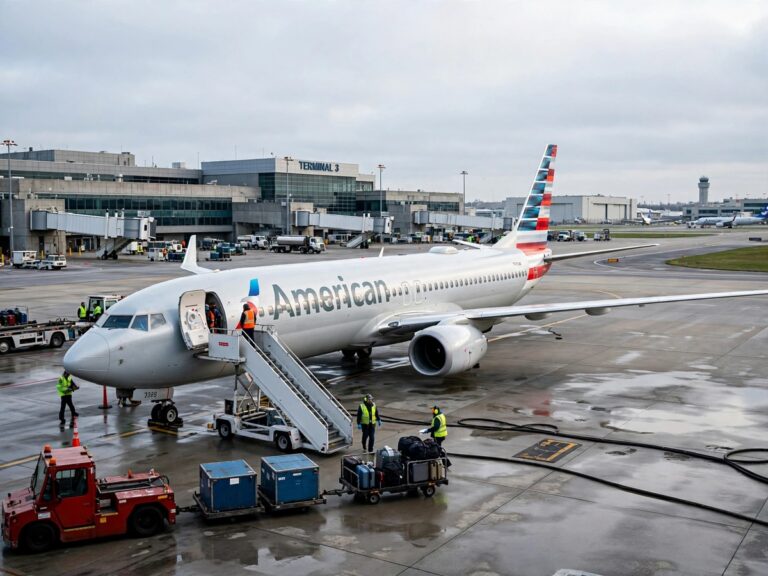
Transportation Secretary Sean Duffy is putting contractor L3 Harris under scrutiny after Friday’s nationwide ground stop turned air travel into a waiting-room marathon. The question investigators are trying to answer is straightforward: Did workers make a mistake, or did a router fail?
At a Saturday briefing at 10:30 a.m. ET, Duffy said workers were upgrading communication routers at a “remote location” when the nation’s air traffic control system ran into trouble. According to The Gateway Pundit, the disruption left roughly 1.5 million travelers stranded at airports across the country.
“What we’re working to determine is whether we had incompetence from L3 Harris…Or did they install a faulty router,” Duffy said.
That is a fairly important distinction, especially for passengers whose travel plans got reduced to staring at departure boards. Accountability matters, but so does identifying the actual failure before handing out blame.
“We haven’t determined where the fault was: Was it the router, or were they not doing great work for us at L3 Harris?” Duffy said.
The work involved an upgrade from copper to fiber. Duffy described a router being replaced that began overwhelming other parts of the network.
“That router started flooding other routers in the air traffic control system.”
Investigators are examining whether the contractor made an installation error or whether the equipment itself malfunctioned. Neither explanation had been established at the time of the briefing. Duffy’s criticism was pointed, but his own remarks left the central question open.
He also said officials “don’t believe” a cyberattack caused the incident, although they had not ruled out that possibility. That distinction deserves to survive the headline cycle: Unlikely is not the same as excluded, and suspicion is not a finding.
The FAA ordered the nationwide ground stop Friday afternoon because of air traffic control communication problems. Departures were halted at U.S. airports, while aircraft already airborne were permitted to land. The restriction was lifted hours later.
Unfortunately, lifting an order does not instantly restore everyone’s itinerary. The report cited FlightAware figures showing more than 4,000 cancellations and thousands of delays, with the disruption potentially taking several days to unwind.
Travelers deserve a functioning system and a straight explanation when it fails. Duffy has identified the contractor and the equipment investigators are examining. Now comes the less glamorous part: establishing what went wrong and who, if anyone, was responsible. A canceled flight is aggravating enough without accountability getting stuck in a holding pattern, too.