
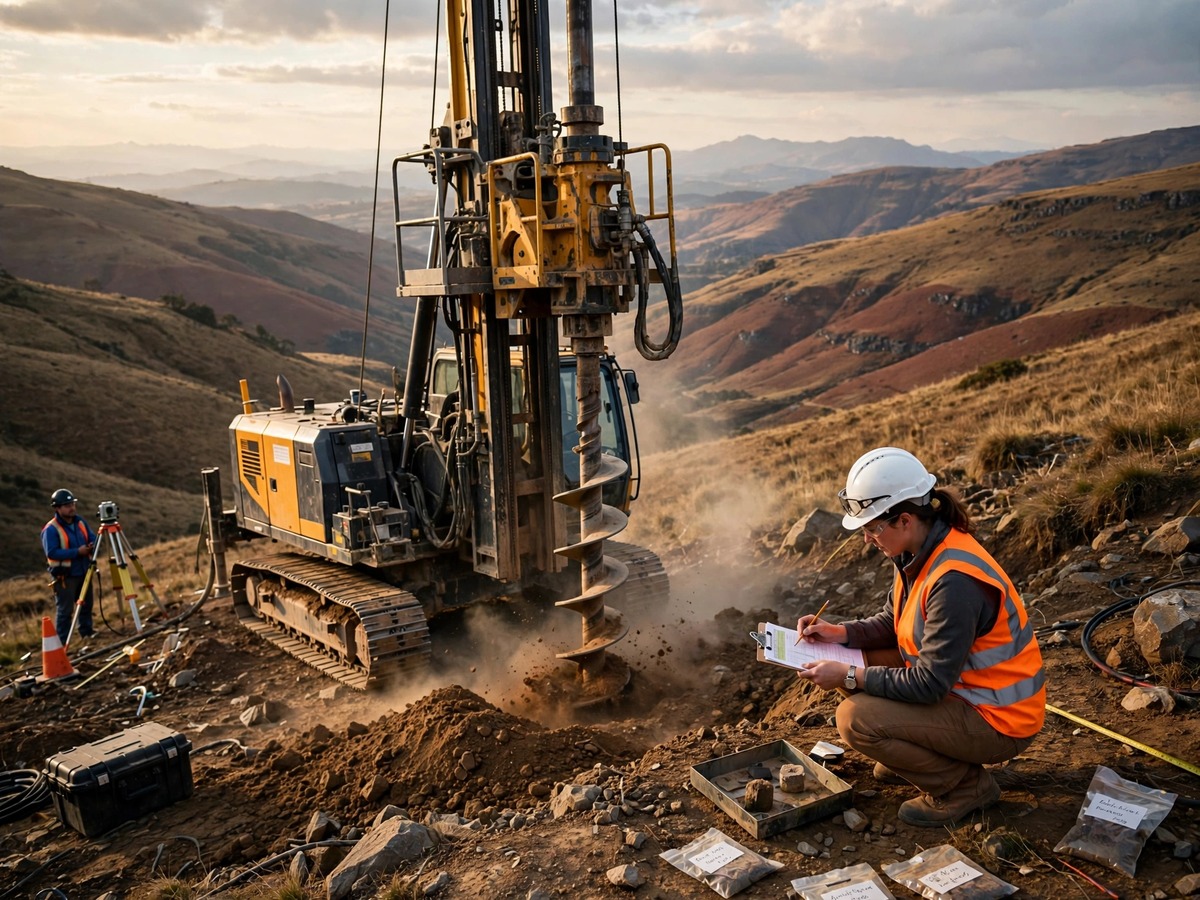
A broken bit raises a hard question
An international team drilling the boat-shaped Durupınar formation near Mount Ararat says a core-drilling bit broke after striking a layer harder than limestone. The failure occurred about 4 to 5 meters below the surface in a hole inside the area that would represent the vessel’s hull. The team says petrified or highly mineralized wood is one possibility and plans to send samples for third-party laboratory testing. Petrified wood is typically harder than limestone, but the broken bit is not a laboratory result. For now, it proves one thing with complete certainty: the bit broke.
What the drilling has found
Noah’s Ark Scans says the permitted program is the first deep, dry core-drilling effort in the site’s recorded history. The group is working with Sivas Cumhuriyet University and collecting cores from inside and outside the formation for compositional, organic, and stratigraphic analysis. Researchers say they have recovered rich organic material that could be decayed remains, while several cavities have also been found, including one filled with mud and water. The team says no bedrock or solid limestone has yet been identified in the holes drilled inside the formation, a finding it argues challenges the claim that the mound is simply a natural limestone structure.
A small drone may get the next look
The project also plans to send a custom-built underground drone, named GOPHER after the “gopher wood” mentioned in Genesis, into voids and corridors mapped by ground-penetrating radar and electrical resistivity surveys. The machine is designed to pass through narrow boreholes with a high-resolution camera, allowing researchers to inspect possible spaces without opening large excavation trenches. The team says cores will undergo laboratory testing this winter, while the drone could provide a closer look at areas that surface scans cannot settle. It is a fairly elaborate approach to a very old question, but rocks have never been known for answering quickly.
The geological debate is still open
The Durupınar formation is a 157-meter, or 515-foot, boat-shaped mound first spotted in 1959 by Turkish Army Capt. İlhan Durupınar. Geologists have long described it as a natural landslide or limestone block, while Andrew Jones, vice president of the Noah’s Ark Research Project, says the new findings challenge that explanation and argues that the site is Noah’s Ark. Turkish officials voted unanimously earlier this year to permit a group of American Christians to study the formation. Lauren Witzke, co-producer of the 2022 film Died Suddenly, is identified as a fundraiser and producer for the effort. The pending lab work, not the promotional language surrounding the expedition, will have to carry the argument from possibility to evidence.
WE’D LOVE TO HEAR YOUR THOUGHTS! PLEASE COMMENT BELOW.
Leave a Comment