
Europe’s Confidence Meets the Spreadsheet
Europe likes to talk like it is still running the world. The numbers, annoyingly for the PR department, tell a different story. An April 2026 report from the Institute of Economic Affairs says the UK’s GDP per capita is lower than every U.S. state, even Mississippi. That is not just a bad week. It is a national-scale reminder that vibes do not pay the bills. Many Britons still think their country is at or above American wealth levels, but the data says average income has fallen behind the poorest U.S. states. This is what happens when a public debate is run by slogans, old memories, and bureaucrats who confuse managed decline with stability.
Washington Pushes, Europe Grumbles
Across the Atlantic, European leaders have not loved the Trump administration’s habit of asking awkward questions. That includes censorship, tariffs, NATO spending, and migration policy. The old arrangement was simple: America paid, Europe preached, and everyone pretended the math was noble. Now Washington is demanding a fairer deal, and the result is a lot of hurt feelings from officials who enjoy moral lectures more than balance sheets. European elites are especially touchy about migration and multicultural policy, since the U.S. move to reverse illegal migration has made Europe’s own indecision look even worse. Nothing triggers a policy class like seeing another country do the thing they said was impossible.
Germany Talks Tough, Then Checks the Budget
German Chancellor Friedrich Merz recently stirred the pot by saying the U.S. was being humiliated by Iran and lacked a clear strategy. Then, after the Trump administration pushed back, Merz found a warmer tone very quickly. He praised the U.S. as Germany’s most important partner in NATO and repeated that Iran must not get nuclear weapons. It was a neat little correction, almost as if access to American power still matters. NATO officials also rushed to smooth things over, claiming Europeans were trying to understand Washington’s moves. Understand them? The moves were clear enough. The issue was not confusion. It was dependence.
Base Closures Would Hit Real Economies
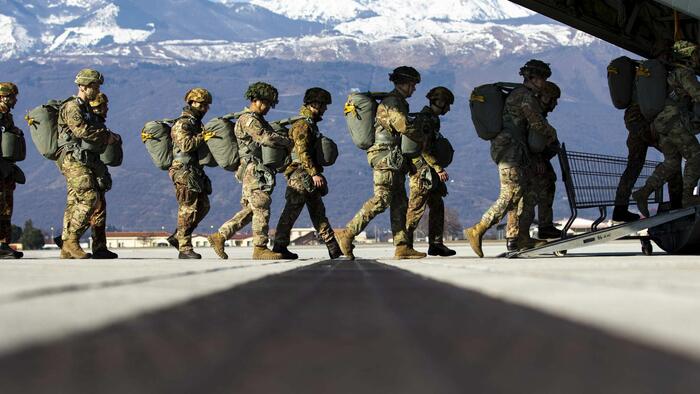
That dependence is not abstract. U.S. military bases in Germany, Italy, and Spain support local jobs, local shops, and local tax revenue. Germany is said to take in about $4.1 billion a year from U.S. spending around bases, with more than 10,000 direct German jobs and about 70,000 indirect jobs tied to the American presence. Italy gets roughly $312 million a year in Naples alone, plus at least 5,000 direct jobs. Spain sees about $713 million in annual economic activity and around 8,000 jobs tied to U.S. bases. In Germany, places near Ramstein and other installations would feel the hit fastest. Rural communities do not care much for grand theories about geopolitics. They care whether the paycheck clears.
Defense Cuts Look Cheap Until They Don’t
Europe has been able to spend less on defense because the U.S. has done so much of the heavy lifting. That freed cash for generous welfare systems and other political comforts, which is fine right up until someone asks what happens if America leaves the room. The U.S. global defense budget sits near $1 trillion, and direct on-ground operational costs in Europe were estimated at around $30 billion to $36 billion annually in 2025. That may sound like a line item large enough to survive any speechwriter’s spin, but it matters in the towns that live off the base economy. For years, European leaders have acted as if American protection were a permanent feature of nature, like rain or taxes. It is not. It is policy, and policies can change.
WE’D LOVE TO HEAR YOUR THOUGHTS! PLEASE COMMENT BELOW.
Leave a Comment