
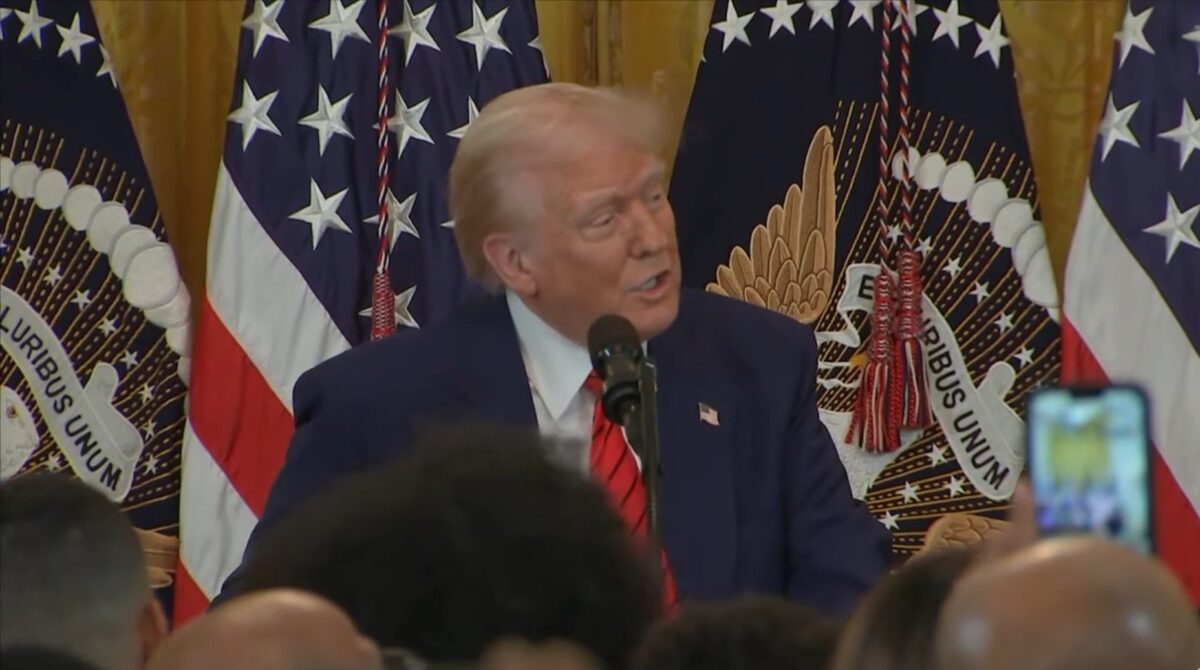
President Trump is once again saying out loud what a lot of Americans have been thinking for years, the homelessness crisis is inseparable from severe mental illness, and pretending otherwise has wrecked our cities. On Tuesday, while marking the one year anniversary of his inauguration, President Trump made it clear he intends to continue pushing for the return of mental hospitals as part of a broader effort to restore public order.
Speaking candidly at a press conference, President Trump reminded reporters that he already signed an executive order aimed at addressing crime, disorder, and homelessness. “Signed an executive order to bring back mental institutions and insane asylums. We are going to have to bring them back. Hate to build those suckers but you’ve got to get the people off the streets,” he said. Subtle as a brick, but sometimes that is exactly what is required.
The order, titled Ending Crime and Disorder on America’s Streets, directs federal agencies to prioritize funding for states that ban public drug use, outlaw urban camping, and expand civil commitment laws. Civil commitment allows courts to order treatment for individuals who are a danger to themselves or others because of serious mental illness. That concept used to be common sense, before activists decided that letting people rot on sidewalks was somehow compassionate.
The policy also takes direct aim at decades of failed legal doctrine. The administration is pushing the Justice Department to challenge precedents stemming from Olmstead v. L.C., which prioritized community based care over institutional treatment under the Americans with Disabilities Act. In theory, that sounded humane. In reality, it emptied hospitals and filled city streets with people who clearly cannot care for themselves.
Trump’s order also moves away from the disastrous Housing First model, which hands out apartments with no requirement for sobriety or treatment. Anyone who has walked through downtown San Francisco, Portland, or Los Angeles knows how that turned out. Under the new approach, treatment participation becomes a condition, not an afterthought.
Trump: Signed an executive order to bring back mental institutions and insane asylums. We are going to have to bring them back. Hate to build those suckers but you've got to get the people off the streets pic.twitter.com/wOPstcmQIj
— Acyn (@Acyn) January 20, 2026
This is not a new position for President Trump. Back in 2023, he openly said that severely disturbed individuals with long arrest records do not belong sleeping under bridges. He said they should be treated in institutions and reintegrated once they are stable enough to manage life. That is not cruelty. That is realism.
The broader debate goes back decades. The United States hit peak institutionalization in 1955, with about 340 psychiatric beds per 100,000 people. Since then, capacity has collapsed. According to Manhattan Institute analyst Carolyn Gorman, state hospital bed capacity is down more than 97 percent from its peak, adjusted for population. Maintaining even current levels is financially unworkable under existing rules.
Supporters argue deinstitutionalization has failed catastrophically, and it is hard to argue otherwise when sidewalks have turned into open air psych wards. Trump is not sugarcoating the solution, and that is exactly why it resonates. Compassion without order is just neglect with better marketing.
Leave a Comment