
What happened
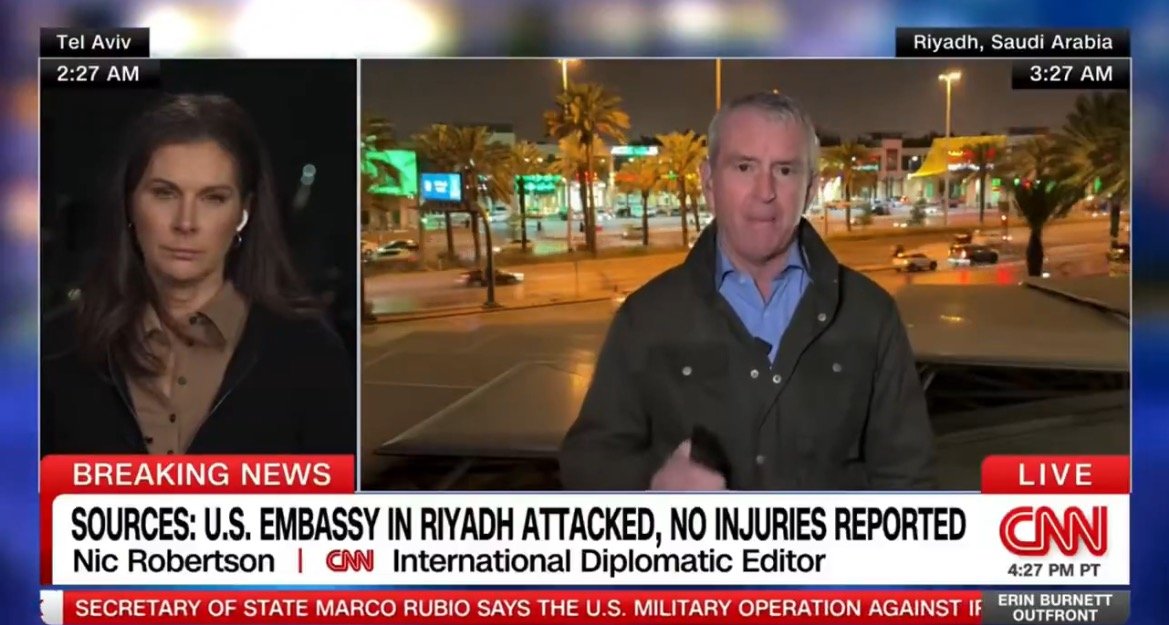
At least two drones struck the U.S. Embassy complex in Riyadh on Tuesday evening, according to multiple U.S. and media sources. Officials said the compound was empty at the time and there were no reported injuries. Fox correspondent Jennifer Griffin reported the embassy was empty, and some outlets described a limited fire at the site. Reports also said a third drone was en route when the initial strikes were announced.
Official response on the ground
The American mission in Saudi Arabia sent a shelter in place alert for Riyadh, Jeddah and Dhahran and advised limiting nonessential travel to military sites. That is sensible advice. It also exposes the odd reality of modern diplomacy: big security perimeters, few people inside during a strike, and a reliance on alerts and text messages to manage chaos.
State Department warnings and advice
The State Department had warned Americans to consider leaving as it urged people to depart 14 Middle East countries using available commercial transport. Secretary Marco Rubio and other officials pushed out travel alerts and a registration system for citizens. The message is consistent. It is also a reminder that official warnings are only useful if people get them in time and commercial routes remain open.
Why it matters beyond the headlines
An embassy strike is not just a dramatic photo op for cable channels. It is a direct challenge to diplomatic norms and to regional stability. Whether this was a state action or a proxy attack, the practical effects are the same: higher risk for personnel, added pressure on governments to respond, and faster moves from routine diplomacy to contingency planning. Expect questions about deterrence and accountability in the coming days.
Sources and live feeds
https://twitter.com/JenGriffinFNC/status/2028628910842200571?ref_src=twsrc%5Etfw
https://twitter.com/SecRubio/status/2028604544326705290?ref_src=twsrc%5Etfw
WE’D LOVE TO HEAR YOUR THOUGHTS! PLEASE COMMENT BELOW.

Leave a Comment