
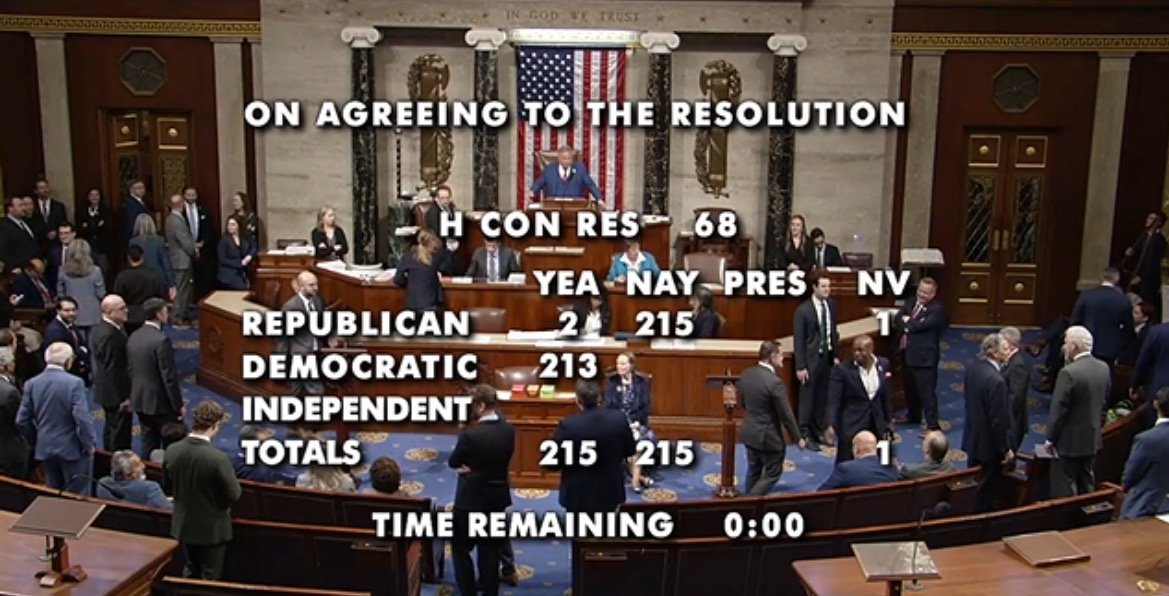
What happened on the House floor
The House voted and the result was a tie. The war powers resolution meant to stop further U.S. military action in or against Venezuela without explicit congressional approval failed on a 215 to 215 vote. A tie in the chamber is not heroic. It simply means no action. The speaker kept the vote open until one member arrived from Texas, but the outcome stayed even.
Which lawmakers flipped or joined sides
Two Republicans voted with Democrats on the measure. Names matter. The two GOP members who broke ranks joined Democrats to block the resolution. In tight votes like this, a single lawmaker walking in late or skipping the floor can be decisive. That is a feature of our system rather than a bug. It also makes for bad headlines and stranger math.
How the Senate muddied the waters
The Senate has already been back and forth on a similar measure. At one point senators voted to advance a war powers resolution by a narrow margin. Then a couple of Republican senators reversed course and helped block debate. Vice President Vance later cast a tie breaking vote in that fight. The upper chamber showed that party unity on war powers is optional at best.
What the White House ordered before the vote
The House vote came after reported presidential orders to strike in Venezuela and the capture of Nicolas Maduro. Federal prosecutors also returned an indictment in New York against Maduro. The administration said Venezuela would transfer 30 to 50 million barrels of oil to the United States and that the oil would be sold at market price. Those are big moves to happen without a clear congressional bill of authorization.
Why this matters for Congress and war powers
This is about the balance of power. Congress is supposed to debate and authorize major military actions. When votes end in ties and senators flip, it shows how fragile congressional control can be. Lawmakers will keep arguing about process, while the operational decisions carry on. The public gets headlines and little clarity, which suits nobody except the bureaucratic machines that prefer ambiguity.
WE’D LOVE TO HEAR YOUR THOUGHTS! PLEASE COMMENT BELOW.


Leave a Comment